
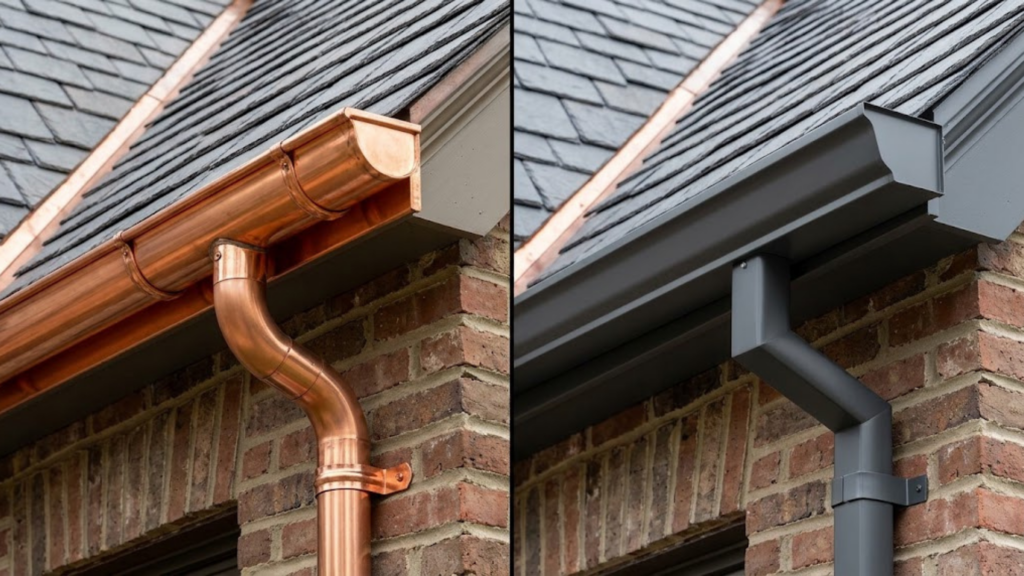
Homeowners face a major exterior decision when upgrading their roof drainage systems. Specifically, you must balance upfront installation budgets against long-term property value. Choosing between copper vs. aluminum gutters requires a careful look at three critical factors: price, curb appeal, and structural lifespan. Both metals offer reliable protection against water damage. However, each material serves a very different budget and architectural style. Let us explore how these two popular gutter options compare across every category.
Quick Comparison: Copper vs. Aluminum Gutters at a Glance
Before diving into the details, review this side-by-side comparison. Ultimately, this snapshot highlights the core differences between these two metal drainage systems.
| Feature | Copper Gutters | Aluminum Gutters |
| Average Cost (Installed) | $20 – $40+ per linear foot | $4 – $14 per linear foot |
| Average Lifespan | 50 – 100 years | 20 – 30 years |
| Appearance & Finish | Natural metallic shine that ages into a blue-green patina | Factory-baked enamel; available in 20+ colors and paintable |
| Durability & Dent Resistance | Heavy-gauge, rigid, withstands heavy snow and hail | Lightweight, softer metal, prone to denting from ladders and limbs |
| Installation Complexity | High (requires soldered joints and specialized copper fasteners) | Low to Moderate (seamless roll-forming or DIY-friendly sections) |
| Maintenance Level | Very low (naturally resists algae, moss, and rust) | Moderate (requires periodic cleaning and seam or paint checks) |
Cost Breakdown: Upfront Price vs. Lifetime Value
Budget often drives the final decision for residential gutter installation. Therefore, you should examine both initial expenses and long-term return on investment.
Upfront Material and Installation Costs
Aluminum gutters win easily on initial affordability. On average, homeowners pay between $4 and $14 per linear foot for installed seamless aluminum gutters. Consequently, an average 200-foot home project costs roughly $800 to $2,800. In contrast, copper gutters cost between $20 and $40 per linear foot. Thus, that same 200-foot home requires an investment of $4,000 to $8,000 or more. Copper raw materials cost significantly more than aluminum. Furthermore, copper installation demands specialized labor because technicians must torch-solder every joint instead of using standard sealants.
Long-Term ROI and Replacement Cycles
Despite the steep initial price, copper delivers impressive lifetime value. For instance, a single copper system often lasts over 60 years. Meanwhile, aluminum gutters typically last 20 to 30 years. As a result, you will likely replace an aluminum system two or three times during a copper gutter’s lifespan. Additionally, buyers view copper as a luxury architectural upgrade that boosts home resale value.
When calculating your final budget, also account for these hidden project costs:
- Compatible Hardware: Installers must use solid copper or brass hangers to prevent galvanic corrosion.
- Downspout Upgrades: Matching copper downspouts and decorative rain chains increase the total material bill.
- Gutter Guards: Adding copper mesh screens costs noticeably more than standard aluminum leaf guards.
Appearance, Curb Appeal, and Architectural Styles
Your gutters frame your roofline and shape your home’s exterior personality. Consequently, visual appeal plays a huge role in material selection.
The Natural Evolution of Copper Patina
New copper gutters shine with a bright, warm penny-like glow. Over time, outdoor exposure triggers natural oxidation. First, the bright metal deepens into a rich, dark bronze tone. Eventually, after 15 to 20 years, the surface develops a prized blue-green patina known as verdigris. Therefore, copper elevates historic, Victorian, Tudor, Craftsman, and luxury custom homes. No synthetic paint can replicate this living, evolving finish.
Color Versatility and Seamless Aluminum Profiles
Conversely, aluminum gutters offer unmatched color customization. Manufacturers coat aluminum coils with durable, factory-baked enamel in over 20 shades. Because of this variety, you can match your gutters directly to your trim, fascia, or siding. Furthermore, homeowners can repaint aluminum later if they change their exterior color scheme. Both metals come in traditional K-style and classic half-round profiles. However, half-round copper gutters remain the gold standard for old-world elegance.
Longevity, Durability, and Weather Resistance
Harsh weather tests your rain gutters every single season. Accordingly, you need a metal that resists local climate extremes without failing.
- Corrosion and Rust: Neither copper nor aluminum rusts like galvanized steel. However, coastal salt air corrodes aluminum much faster than heavy copper.
- Impact and Hail Resistance: Installers typically use rigid 16-ounce or 20-ounce copper. Conversely, residential aluminum usually measures a thinner .027 or .032 gauge. Thus, heavy hail, falling tree branches, and leaning ladders dent aluminum far more easily.
- Thermal Expansion: Extreme temperature swings cause aluminum to expand and contract rapidly. Over decades, this movement loosens fasteners and pulls caulked seams apart. Meanwhile, soldered copper joints stay rigid and watertight through freezing winters and blazing summers.
Installation Process: DIY vs. Professional Expertise
Installation methods differ drastically between these two metals. For aluminum, contractors bring a portable roll-forming machine directly to your driveway. Technicians extrude continuous seamless lengths on-site, attach hidden hangers, and seal corners with silicone caulk. Handy homeowners can even install sectional aluminum gutters themselves over a weekend.
On the other hand, copper requires true metalworking craftsmanship. Specialists custom-cut sections, fit mitered corners, and weld joints using a torch and lead-free solder. Moreover, installers must never mix copper with steel or aluminum fasteners. Touching dissimilar metals triggers rapid galvanic corrosion that eats straight through the gutter trough.
Maintenance Requirements and Upkeep
Every drainage system needs basic care to keep rainwater flowing away from your foundation. Fortunately, metal gutters require far less work than wood or vinyl alternatives. Follow these essential maintenance steps to protect your investment:
- Clear Debris Twice Yearly: Remove fallen leaves, pine needles, and twigs every spring and autumn. Standing wet debris creates organic acids that slowly degrade aluminum coatings.
- Inspect Seams and Hangers: Check caulked aluminum end caps and corners annually for leaks. Copper’s soldered seams rarely fail, though you should still verify that hangers remain tight after heavy snowstorms.
- Skip the Paint on Copper: Repaint peeling aluminum gutters every 15 years to maintain curb appeal. Conversely, never paint or seal copper, because coatings trap moisture and ruin the natural patina process.
Environmental Impact and Sustainability
Eco-conscious homeowners appreciate that both metals support green building practices. Specifically, aluminum and copper remain 100 percent recyclable at the end of their service lives. In fact, modern aluminum gutter coils already contain high percentages of post-consumer recycled metal. Meanwhile, copper’s century-long durability eliminates repeated manufacturing, shipping, and disposal waste over several generations.
Pros and Cons Summary: Copper vs. Aluminum
Reviewing the core strengths and drawbacks clarifies which material fits your priorities best.
Pros and Cons of Copper Gutters
- Pro: Delivers unmatched luxury curb appeal and a natural blue-green patina.
- Pro: Lasts 50 to 100 years with minimal maintenance.
- Pro: Resists hail dents, heavy snow loads, and coastal salt air.
- Con: Requires a high upfront budget and specialized soldering contractors.
- Con: Attracts metal thieves on vacant or remote construction sites.
Pros and Cons of Aluminum Gutters
- Pro: Fits almost any renovation budget at $4 to $14 per foot.
- Pro: Offers 20+ baked-on colors to blend seamlessly with your trim.
- Pro: Installs quickly as a continuous, leak-resistant seamless system.
- Con: Dents easily from ladders, hailstorms, and falling branches.
- Con: Requires full replacement after 20 to 30 years.
Final Verdict: Which Gutter Material Should You Choose?
Ultimately, your budget, home style, and long-term moving plans determine the winning choice. Use these clear guidelines to make your final decision:
- Choose Copper If: You own a historic, brick, stone, or high-end custom home. Additionally, pick copper if you plan to stay in your forever home for 15 or more years and want standout architectural character.
- Choose Aluminum If: You want reliable, rust-free water protection at a practical price. Furthermore, select aluminum if you prefer color-matching your exterior trim or plan to sell your property within ten years.
Next, gather itemized quotes from three licensed local gutter contractors. Compare exact material gauges, warranty terms, and installation timelines side by side so you can invest with complete confidence.
Other Post:
Copper vs. Aluminum Gutters: Which Is Right for Your Budget?