Gutters play an essential role in protecting New Jersey homes from rainwater, snowmelt, and moisture-related damage. They collect water from the roof and direct it safely away from the foundation, siding, landscaping, and other vulnerable areas of the property. However, gutters can eventually develop problems such as leaks, sagging, rust, cracks, or blockages. When this happens, many homeowners wonder whether they should schedule gutter repair in NJ or invest in a complete gutter replacement. Understanding the difference can help you make a practical decision based on the condition, age, and performance of your gutter system. While minor problems may only require a simple repair, extensive or recurring damage can make replacement the more cost-effective long-term solution.
What Is Gutter Repair?
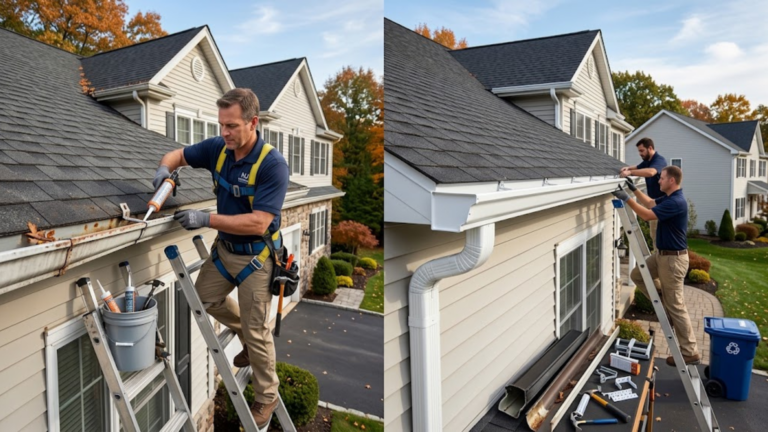
Gutter repair is designed to fix specific problems while keeping most of the existing gutter system in place. It is generally appropriate when the gutters are still in reasonably good condition and the damage is limited to one or a few areas.
Common gutter repairs include:
- Fixing small leaks and holes
- Re-sealing leaking joints
- Replacing loose hangers
- Repairing minor sagging
- Reconnecting downspouts
- Replacing damaged end caps
- Correcting minor pitch problems
- Repairing isolated storm damage
A professional gutter repair contractor in NJ can inspect the system and determine whether the existing gutters still have enough structural integrity to remain in service. If the problem is localized, repairing it can be considerably more practical than replacing an otherwise functional gutter system.
What Is Gutter Replacement?
Gutter replacement involves removing some or all of an existing gutter system and installing new gutters. This option becomes more appropriate when the system has widespread deterioration or continues to experience problems despite repeated repairs. Homeowners may need gutter replacement in NJ when they notice extensive corrosion, multiple leaks, severe sagging, damaged sections, or gutters that repeatedly pull away from the house. Replacement can also be beneficial when an existing gutter system is outdated, undersized, or poorly configured for the home’s drainage requirements. During replacement, homeowners can also upgrade to modern options such as seamless aluminum gutters, larger downspouts, or gutter guards. This makes replacement an opportunity to improve the overall performance of the home’s drainage system rather than simply fixing an individual problem.
Gutter Repair vs. Replacement: What Is the Difference?
The biggest difference between gutter repair and replacement is the extent of the problem. Repair addresses a specific defect, while replacement addresses a gutter system that has reached the end of its useful life or has suffered extensive damage.
| Factor | Gutter Repair | Gutter Replacement |
|---|---|---|
| Main purpose | Fix an isolated problem | Replace a deteriorated system |
| Best for | Minor leaks, loose hangers, small cracks | Severe damage, corrosion, repeated failures |
| Scope | One or several areas | Major sections or entire system |
| Initial cost | Usually lower | Usually higher |
| Long-term solution | Depends on overall gutter condition | Provides a new system |
| Material upgrades | Limited | Wide range of options |
| Ideal situation | Gutter system is generally healthy | Existing gutters are aging or failing |
Signs You Only Need Gutter Repair
Not every gutter problem means you need new gutters. If your system is relatively new and most sections remain structurally sound, repairing the affected area may be enough.
Consider gutter repair when:
- Only one or two areas are leaking.
- A small hole or crack has developed.
- One gutter hanger has become loose.
- A downspout has disconnected.
- One section has minor sagging.
- The gutters have suffered limited storm damage.
- Water flow problems are caused by a minor blockage or pitch issue.
- The majority of the gutter system remains in good condition.
Signs Your Gutters Need Replacement
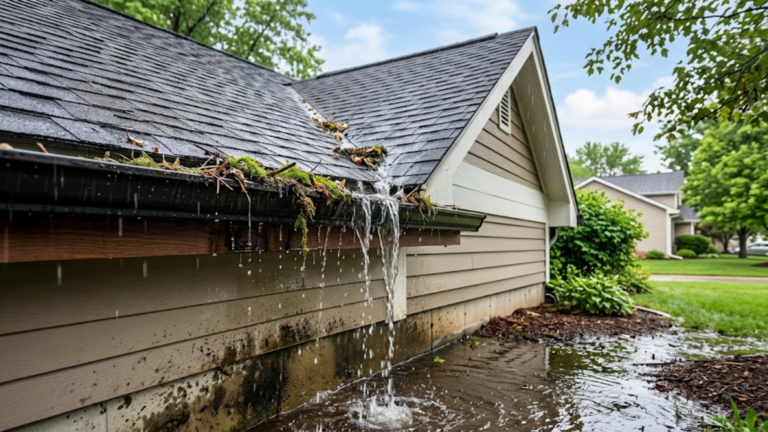
Replacement becomes more appropriate when problems are widespread, severe, or recurring. Continuing to repair an aging gutter system can sometimes become more expensive than installing a new one.
Watch for these warning signs:
- Frequent leaks in multiple locations
- Extensive rust or corrosion
- Severe sagging throughout the gutter system
- Gutters pulling away from the fascia
- Multiple cracked or damaged sections
- Persistent overflowing during rainfall
- Water repeatedly pooling around the foundation
- Frequent need for repairs
- Gutters that are visibly deteriorating
- An undersized or poorly designed drainage system
How New Jersey Weather Affects Gutters
New Jersey homes experience a variety of weather conditions throughout the year, and gutters must withstand heavy rainfall, snow, freezing temperatures, ice, strong winds, and falling leaves. These conditions can place considerable stress on older gutter systems. Heavy rain can expose leaks and drainage problems, while snow and ice can add significant weight to gutters. Freeze-thaw cycles may also worsen cracks and weakened connections. During autumn, leaves and other debris can block gutters and downspouts, causing water to overflow. Because of these seasonal challenges, homeowners should not ignore seemingly minor gutter problems. A small leak or loose section can become more serious if it is repeatedly exposed to moisture and harsh weather.
Gutter Repair vs. Replacement Cost in NJ
The cost of gutter repair and replacement in NJ varies from one property to another. There is no single price that applies to every home because several factors influence the final cost.
These include:
- Total gutter length
- Type of gutter material
- Extent of existing damage
- Number of downspouts
- Number of corners and roof sections
- Home height and accessibility
- Condition of fascia and soffits
- Seamless or sectional gutter installation
- Need for additional drainage improvements
Repairs generally cost less upfront because only a small portion of the system is addressed. However, repeatedly paying for repairs on an aging system may not be the most economical approach. A professional inspection can help determine whether repairing the current gutters or replacing them would offer better value.
Should You Repair or Replace Your Gutters?
A simple way to approach the decision is to consider the age, condition, and frequency of problems. Choose repair when the damage is localized and the rest of the system remains structurally sound. For example, replacing a damaged hanger or sealing one leaking joint may be all that is necessary. Replacement may be the better option when the gutters are old, heavily corroded, severely damaged, or constantly requiring repairs. Persistent overflow can also indicate that the existing system is not properly designed for the home’s water volume. A professional inspection is particularly valuable because the visible problem may not always be the underlying issue. Poor gutter pitch, inadequate downspouts, damaged fascia, or improper installation can all contribute to recurring drainage problems.
Consider Seamless Gutters When Replacing Your System
If replacement is necessary, homeowners may want to consider seamless gutters in NJ. Unlike sectional gutters, seamless systems are typically manufactured to the required length at the property, resulting in fewer joints along each run. Fewer joints can mean fewer potential locations for leaks. Homeowners can also discuss options such as aluminum gutters, larger downspouts, and gutter guards with their contractor to create a drainage system suited to their property’s needs.
Final Verdict: Repair or Replace?
Choosing between gutter repair and replacement ultimately comes down to the severity and frequency of the problems. Minor, isolated damage can often be repaired, while widespread deterioration, recurring leaks, severe sagging, and persistent drainage issues may justify complete replacement. If you are unsure which option is right for your home, have your gutters professionally inspected before making a decision. A qualified NJ gutter contractor can identify the underlying problems, evaluate the condition of the entire system, and recommend the most practical solution.