Your home’s gutter system plays an important role in directing rainwater away from the roof, siding, landscaping, and foundation. When gutters stop working properly, even a small problem can eventually lead to expensive water damage. For homeowners, recognizing the signs of failing gutters can help prevent bigger issues and determine when gutter replacement in Monmouth County is a better option than another repair.
From sagging sections and rust to persistent leaks and foundation pooling, several warning signs indicate that your gutters may have reached the end of their useful life. If you notice more than one of these problems, having your system professionally inspected can help you decide whether repairs or complete replacement are necessary.
Your Gutters Are Sagging or Pulling Away From the House
Gutters should remain securely attached to the fascia and maintain a consistent slope toward the downspouts. If you notice sections that are dipping, bending, or pulling away from the house, the system may no longer be draining water correctly.
Sagging can occur because of accumulated debris, standing water, damaged hangers, or deterioration caused by age and weather exposure. While replacing a few hangers may solve an isolated problem, widespread sagging is often a sign that the gutter system needs replacement.
Watch for these warning signs:
- Visible dips along the gutter line
- Gutters separating from the fascia
- Loose or missing fasteners
- Standing water after rainfall
- Uneven or bent gutter sections
Ignoring sagging gutters can allow water to spill over the edges and reach areas of your home that should remain dry.
You See Cracks, Holes, Rust, or Corrosion
Visible damage is one of the clearest signs that your gutters need attention. Small cracks or holes can sometimes be sealed, but extensive damage may make continued repairs impractical.
Rust is particularly concerning because it can gradually weaken the gutter material. Once corrosion spreads across multiple sections, patching individual areas may only provide a temporary solution.
Look carefully for:
- Rust spots or streaks
- Corroded seams
- Cracks and splits
- Holes in the gutter surface
- Peeling finishes
- Deteriorating joints
If several sections show these problems, investing in new gutters may provide better long-term protection than repeatedly repairing damaged areas.
Your Gutters Frequently Overflow During Rain
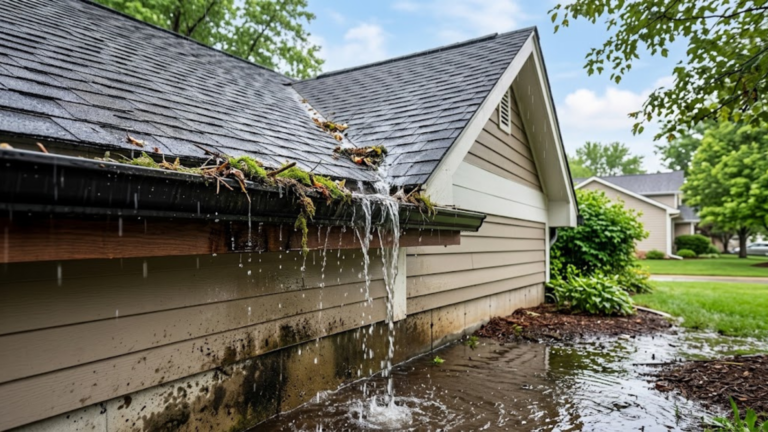
Gutter overflow does not always mean you need a complete replacement. Leaves, dirt, and other debris can block gutters and downspouts, preventing water from flowing properly. However, if your gutters continue overflowing after cleaning and maintenance, there may be a more serious problem.
Improper gutter pitch, damaged sections, insufficient downspouts, or an outdated system can all contribute to poor drainage. Persistent overflow should not be ignored because water can run down the exterior walls or collect around the home’s foundation.
A professional gutter contractor in Monmouth County can inspect the system and determine whether cleaning, repair, or replacement is the most appropriate solution.
Water Is Pooling Around Your Foundation
One of the most important functions of gutters is to move roof runoff away from the foundation. When gutters are damaged or downspouts are not directing water far enough away, rainwater can accumulate around the base of your home.
Look for puddles or consistently wet soil near the foundation after rainfall. Other potential warning signs include soil erosion, basement moisture, and water stains around lower-level walls.
Poor gutter drainage can contribute to:
- Foundation moisture
- Basement leaks
- Soil erosion
- Landscape damage
- Siding stains
- Excess moisture around the home
If water repeatedly collects near your foundation, do not assume the issue will resolve itself. Your entire drainage system should be evaluated.
Your Fascia, Soffits, or Siding Shows Water Damage
Sometimes the first indication of gutter failure appears somewhere other than the gutters. Water escaping from damaged or improperly positioned gutters can affect the fascia, soffits, siding, and other areas beneath the roofline.
Peeling paint, discoloration, staining, bubbling surfaces, or soft wood around the fascia can indicate prolonged moisture exposure.
If these problems are present alongside damaged gutters, replacement may be necessary to prevent continued water intrusion. A professional inspection can also determine whether existing wood or other materials have already sustained damage.
Your Gutters Keep Getting Clogged
Some debris accumulation is normal, especially for homes surrounded by trees. However, gutters that become clogged repeatedly despite regular cleaning may have an underlying design or condition problem.
Repeated clogging may be related to:
- Improper gutter size
- Poor gutter pitch
- Damaged or bent sections
- Insufficient downspouts
- Heavy leaf accumulation
- An aging gutter system
Gutter guards can reduce debris buildup in many situations, but they cannot fix gutters that are structurally damaged or incorrectly installed. If the system itself is deteriorating, replacement should be considered before adding new accessories.
Your Gutters Are Old and Require Frequent Repairs
Age by itself does not necessarily mean your gutters need to be replaced. A properly maintained system can continue working effectively for many years. However, an older system that constantly requires repairs deserves closer attention.
If you have already repaired leaks, replaced hangers, resealed seams, and fixed downspouts several times, continuing to spend money on isolated repairs may not be the most economical choice.
| Gutter Condition | Recommended Action |
|---|---|
| One minor leak | Repair |
| Loose gutter hanger | Repair |
| One damaged section | Repair or partial replacement |
| Multiple leaking seams | Consider replacement |
| Extensive rust or corrosion | Replace |
| Widespread sagging | Replace |
| Repeated overflow | Inspect and consider replacement |
| Frequent repairs | Consider a new system |
A professional assessment can help determine whether gutter repair vs. replacement makes more financial sense for your property.
Repair or Gutter Replacement: Which Is Right?
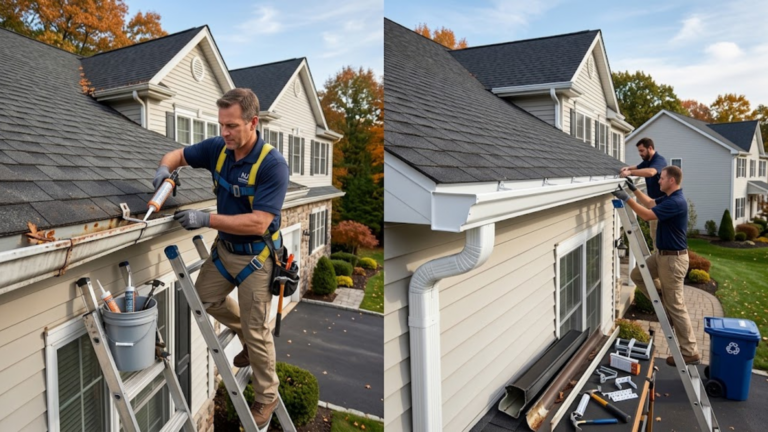
Not every gutter problem requires a complete new system. If the damage is isolated, a qualified contractor may be able to repair the affected area and restore proper drainage.
Replacement becomes more appropriate when damage is widespread or the system repeatedly fails.
Repair may be suitable when:
- One section has minor damage
- A hanger has come loose
- One seam is leaking
- A downspout has become disconnected
- Damage is limited to a small area
Replacement may be better when:
- Several sections are damaged
- Rust has spread extensively
- Gutters repeatedly leak
- Multiple areas are sagging
- Overflow continues after cleaning
- The system requires frequent repairs
- The gutters are old and deteriorating
Choosing replacement when appropriate can provide a more dependable drainage solution and reduce recurring maintenance problems.
Why Monmouth County Homeowners Should Address Gutter Problems
Homes in Monmouth County experience changing weather conditions throughout the year, including heavy rainfall, seasonal storms, falling leaves, and winter weather. These conditions can place considerable stress on residential gutter systems.
Functional gutters help protect several parts of your property, including the roof edge, fascia, siding, landscaping, walkways, and foundation. When the system cannot efficiently handle rainwater, damage can spread beyond the gutter itself.
For homeowners considering gutter replacement in Monmouth County NJ, addressing problems early can be a practical way to protect the property and avoid potentially expensive water-related repairs.
When Should You Call a Gutter Replacement Professional?
If you notice several warning signs at the same time, it is worth scheduling a professional gutter inspection. A contractor can examine the gutters, downspouts, fascia, drainage pattern, and attachment points to determine the actual cause of the problem.
You should consider professional evaluation if your gutters are:
- Sagging or pulling away from the house
- Rusting or developing multiple holes
- Overflowing during normal rainfall
- Frequently becoming clogged
- Causing water to pool near the foundation
- Requiring repeated repairs
- Showing widespread deterioration
Protect Your Home With the Right Gutter Solution
Failing gutters can cause problems that extend far beyond the gutter system itself. If you are seeing leaks, sagging, rust, overflow, or water pooling around your property, do not wait until minor gutter problems become major home repairs. A professional gutter replacement in Monmouth County can help restore proper water drainage and provide your home with a more reliable system. Contact a trusted local gutter contractor to schedule an inspection and determine whether repair or complete replacement is the right solution for your home.